

FINLAND TAKT TIME DATA
Is shorter takt the key to better performance?
We analyzed real project data across Finland from Sitedrive
The pattern is clear: the more granular the work package, the more accurately it tracks to plan
Distribution of takt times in Finnish takt projects
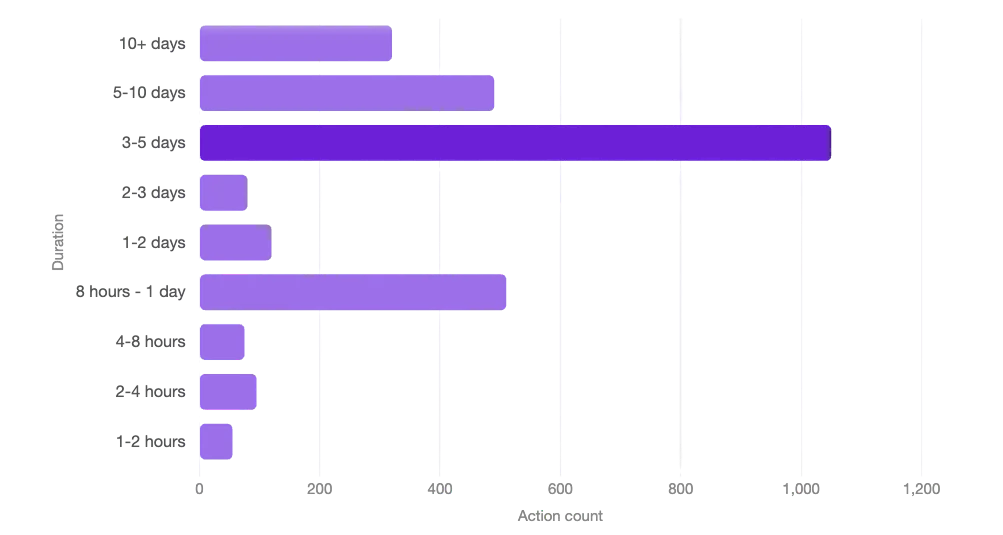
3–5 day takt time still dominates.
Most work packages are still planned in multi-day durations.
Shorter takt times are used far less frequently — even though they create faster feedback loops and better reliability.
Where does your project sit?
Compare your typical takt time against the data.
Smaller work packages finish on time more often.
27,008 work packages from active jobsites in the last 30 days, grouped by planned duration. The pattern is consistent: the more granular the work package, the more accurately it tracks to plan.
On-time share falls steadily as duration grows — from 55% in the shortest bucket to 11% in the longest. Hour-blocks tend to land. Month-blocks tend to slip.
Longer packages have more ongoing work in the mix — they simply haven't reached their planned end date yet. That's why the gray segment grows toward the bottom.
Projects with shorter takt times achieve significantly higher on-time completion rates compared to longer work packages
Up to 3× improvement in on-time performance
Longer work packages hide delays—they stay ‘ongoing’ instead of finishing on time.
The biggest drop in reliability happens when work packages move from hours to days.
Shorter takt times increase predictability across the schedule
Compare your project
What’s your typical takt time?
Select your usual work package duration and see how it compares to real project performance.
Your selection
1–4 hours
From the data
55% on time
This is the highest-performing duration bucket in the data.
What it means
Shorter work packages create faster feedback loops and better control.

What would shorter takt look like on your project?
See how your current plan compares—and where you could improve reliability.